How to Use a Thermal Imaging Phone to Detect Heat Loss After Enclosing a Balcony
Welcome to Blackview (World's well-known brand of rugged smartphones, including rugged phone with projector, thermal camera phone, and rugged phone with eSIM, etc.) blog. Hope the guide helps.
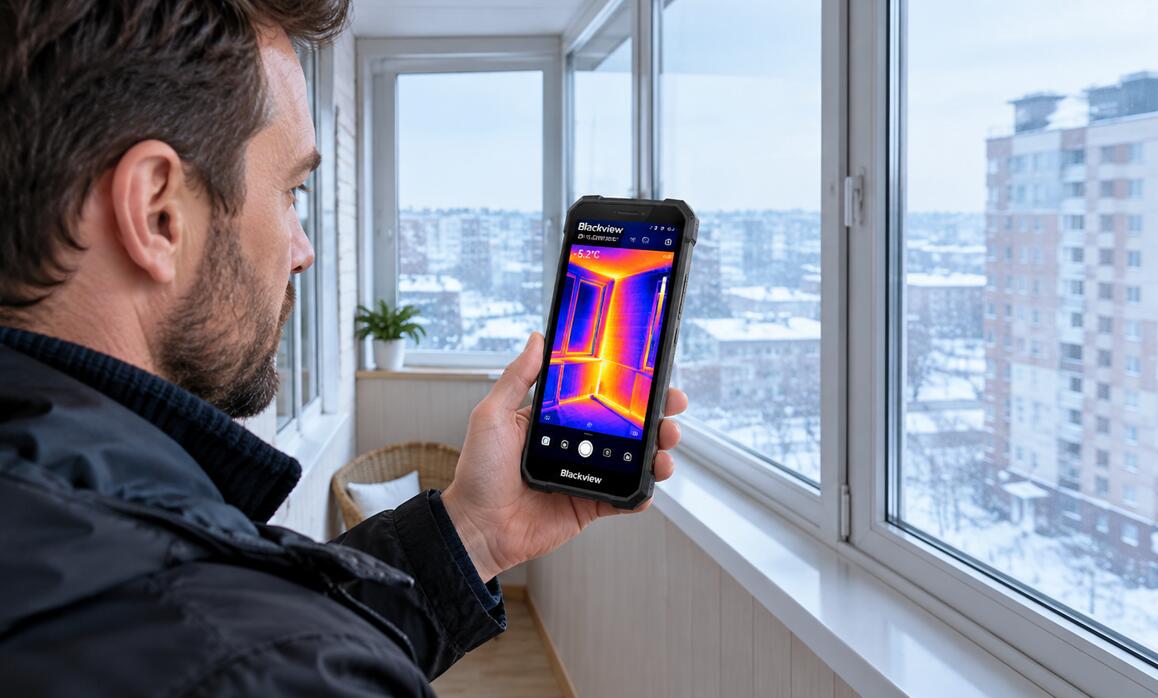
Enclosing a balcony with glass windows or insulated panels can improve comfort and provide extra living space, but it does not automatically eliminate heat loss. Poorly sealed window frames, thermal bridges, gaps around the balcony enclosure, and insufficient insulation can allow indoor heat to escape during cold weather. A thermal imaging phone offers a practical way to identify suspicious cold spots and investigate whether the newly enclosed balcony is performing as expected.
By capturing infrared images of surface temperatures, a thermal imaging phone can reveal temperature patterns that are difficult to notice with the naked eye. However, thermal images do not directly measure heat flow, and cold areas do not always indicate insulation defects. This guide explains how to prepare your balcony, perform a systematic inspection, interpret thermal images, and determine which areas may require further investigation.
- Read also: How does thermal imaging work?
- How to use a Thermal Imaging Phone to locate areas on a radiator that are not heating up?
- How to use a thermal imaging smartphone to detect mold on bread?
- How to quickly locate the heat source of a TV box that is overheating using a thermal imaging phone?
- How to use a thermal imaging phone to quickly identify high-temperature areas caused by poor heat dissipation in an optical modem?
Prepare Your Balcony for Thermal Inspection
Accurate results depend on suitable weather conditions and careful preparation. Before starting, check the following requirements:
- Choose a cold day when the indoor and outdoor temperatures differ sufficiently, preferably after the heating system has maintained a relatively stable indoor temperature for several hours.
- Aim for an indoor-outdoor temperature difference of approximately 10°C or more when practical. A larger difference can make thermal anomalies easier to identify.
- Avoid inspecting surfaces immediately after direct sunlight, rain, or strong winds, which can distort temperature patterns.
- Close balcony windows and doors under normal operating conditions, and keep heating settings consistent throughout the inspection.
- Remove objects that block window frames, corners, wall junctions, and other areas where heat loss may occur.
- Check that your thermal imaging phone or infrared attachment is functioning correctly and has sufficient battery power.
These preparations help reduce misleading temperature differences and make comparisons between surfaces more meaningful.
Steps to Detect Potential Heat Loss
Follow a consistent inspection route so that no important part of the enclosed balcony is overlooked.
- Step 1: Scan the entire balcony. Start with a wide view of the windows, walls, ceiling, floor, and balcony door. Record the general temperature distribution before examining individual details.
- Step 2: Inspect window frames and glass edges. Look for unusually cold bands around frame joints, corners, seals, and the junction between the window frame and surrounding wall.
- Step 3: Examine wall and ceiling connections. Scan the points where the enclosure meets the building facade, ceiling slab, and side walls. Continuous cold lines may indicate thermal bridging or insulation discontinuities.
- Step 4: Check the floor and lower corners. Inspect the junction between the balcony floor and exterior wall, especially near the original balcony slab. Structural concrete can conduct heat more readily than insulated wall assemblies.
- Step 5: Compare suspicious areas with nearby surfaces. Keep the camera distance and viewing angle as consistent as possible. Look for repeatable temperature differences rather than isolated readings.
- Step 6: Save images and document conditions. Record the time, indoor and outdoor temperatures, heating conditions, and exact location of each anomaly. Repeat the scan under similar conditions to see whether the pattern persists.
A systematic scan helps distinguish recurring patterns from temporary temperature changes and provides useful evidence for later repairs or professional assessment.
Identify Common Heat Loss Areas
Several locations deserve particular attention after balcony enclosure work. Cold strips around window frames may suggest air leakage, poor installation, or conductive frame materials. Cold patches near wall corners can indicate thermal bridges or uneven insulation. Temperature differences around the balcony door may point to worn seals or gaps.
However, glass naturally behaves differently from insulated walls, and reflective surfaces can produce misleading infrared readings. Focus on patterns around joints and compare similar materials wherever possible instead of assuming that every cold surface represents a defect.
Understand Thermal Images Correctly
Most thermal imaging phone attachments display temperature differences using a color palette. Depending on the selected palette, colder areas may appear blue or purple, while warmer areas may appear yellow, orange, or red. These colors are relative visual indicators, not universal measurements of insulation performance.
Check the displayed temperature scale and emissivity settings if your device supports them. Glass, shiny metal, and reflective finishes can reflect infrared radiation from surrounding objects, producing inaccurate apparent temperatures. When possible, compare readings on suitable matte surfaces and use the manufacturer's recommended measurement settings.
Distinguish Heat Loss from Condensation Risks
A cold surface is not automatically evidence of heat escaping through a gap. It may result from a thermal bridge, limited insulation, air leakage, or a difference in material conductivity. Cold interior surfaces can also increase the risk of condensation when their temperature falls below the indoor air's dew point.
If you notice persistent moisture, mold, or damp patches, investigate indoor humidity and ventilation as well as insulation. A thermal camera cannot directly measure moisture or confirm the presence of mold. A humidity meter and, where appropriate, a professional moisture assessment can provide additional information.
Improve Inspection Accuracy
To obtain more reliable results, use the same inspection route and camera settings each time. Avoid comparing images taken under substantially different weather or heating conditions. Hold the phone steady, maintain a consistent distance, and capture both wide-angle views and close-ups of suspicious details. Read more about 'How can the temperature readings from a thermal phone be interpreted more accurately?'.
Remember that thermal imaging identifies surface temperature patterns rather than directly calculating the amount of heat escaping. Air leakage tests, insulation inspections, and professional building assessments may be needed to confirm the underlying cause.
Decide When Repairs or Professional Help Are Needed
If a suspicious cold area repeatedly appears around a seal or frame joint, inspect the visible seals for gaps, damage, or poor contact. Minor sealing defects may be repairable, but avoid covering drainage openings or ventilation paths. Suspected insulation defects, extensive cold bands, persistent condensation, or unexplained temperature anomalies should be assessed by a qualified building professional.
For a more complete diagnosis, combine thermal imaging with a visual inspection and, where appropriate, an air leakage test. This approach helps identify the actual cause before you spend money on replacement windows, additional insulation, or other major work.
Final Thoughts
A thermal imaging phone is a useful first-line tool for checking whether an enclosed balcony has obvious cold spots that may indicate heat loss. By inspecting window frames, wall junctions, ceiling connections, floor edges, and balcony doors under suitable temperature conditions, you can identify areas that deserve closer attention. Consistent scanning and careful image documentation make the results easier to interpret.
Ultimately, the goal is not simply to find the coldest pixel on a thermal image, but to understand why a particular area is colder than expected. Combine thermal images with knowledge of the building structure, indoor humidity, and visible construction details. When significant anomalies persist or the cause remains unclear, professional assessment can help confirm the problem and guide effective improvements to the balcony's thermal performance.