How to use a Thermal Imaging Phone to locate areas on a radiator that are not heating up?
Welcome to Blackview (World's well-known brand of rugged smartphones and tablets) blog. Hope the guide helps.
Radiators are designed to distribute heat evenly across their surface, but it is common for certain sections to remain noticeably cooler than others. A radiator that has a warm upper section and a cold lower section, or one that heats strongly on one side while remaining cool on the other, may indicate trapped air, restricted water flow, sludge buildup, a partially closed valve, or another heating-system issue. Finding these uneven areas accurately can be difficult by simply touching the radiator, especially when the temperature difference is relatively small.
A thermal imaging phone provides a convenient way to investigate this problem because it converts infrared radiation into a visible temperature pattern. Instead of relying only on touch, you can scan the entire radiator and immediately see warmer and cooler zones on the screen. With the correct preparation and scanning technique, a thermal camera can help you identify localized cold spots, compare different sections of the radiator, and determine whether further maintenance may be necessary. The following guide explains how to perform the inspection safely and how to interpret the thermal image correctly.
- Read also: How to use a thermal smartphone to quickly locate the heat source of an overheating TV box?
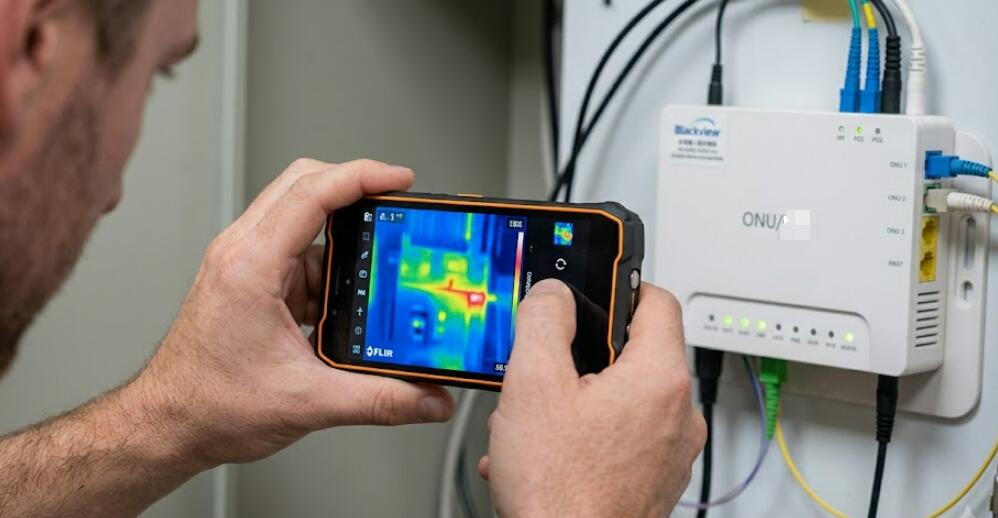
- How can I use a thermal smartphone to quickly identify high-temperature areas on an optical modem?
- How do you use a thermal smartphone to detect mold on bread?
What a Thermal Imaging Phone Can Detect
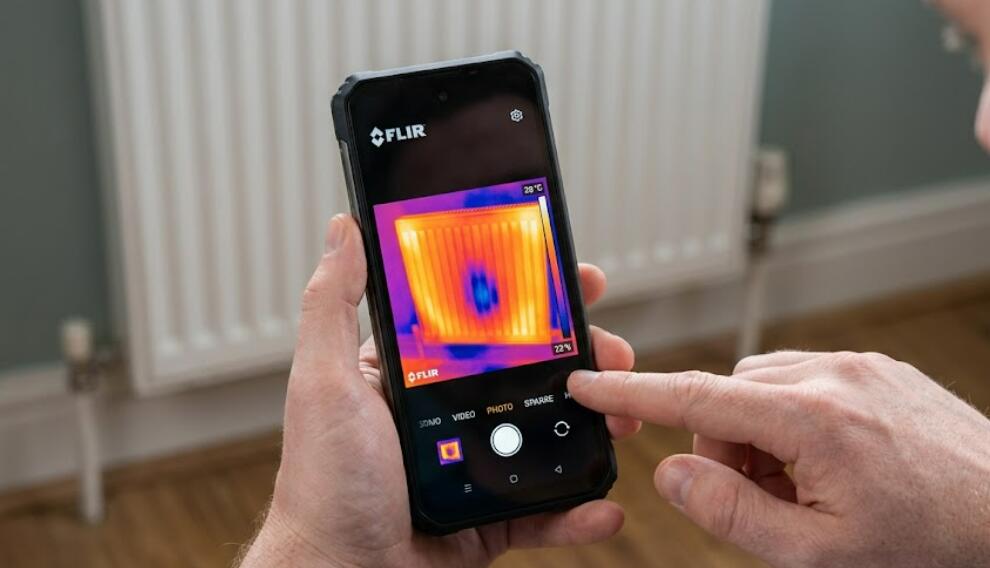
A thermal imaging phone uses an infrared sensor to detect differences in surface temperature. The resulting image normally displays warmer areas in lighter or brighter colors and cooler areas in darker or contrasting colors, although the exact color palette depends on the camera application. The important information is not the color itself but the temperature difference between neighboring parts of the radiator.
Typical Cold-Spot Patterns
Several temperature patterns can provide useful clues about radiator performance. A radiator that is generally warm but has one isolated cooler patch may have a localized flow restriction. A broad cool area at the bottom may suggest deposits or sludge restricting circulation. If the upper portion is significantly cooler than the lower portion, trapped air can sometimes be responsible, particularly when the radiator has difficulty heating evenly after the system starts.
Why Surface Temperature Matters
The thermal camera measures the temperature of the radiator's outer surface rather than the temperature of the water flowing inside it. Therefore, the image should be treated as a diagnostic indication rather than absolute proof of an internal blockage. Surface temperature can also be affected by room temperature, airflow, reflections, radiator material, paint, and nearby objects.
How to Scan a Radiator with a Thermal Imaging Phone
Before taking the thermal image, allow the heating system to operate long enough for the radiator to reach a reasonably stable temperature. Avoid comparing a radiator immediately after the heating turns on with one that has already been operating for a long period. Consistent conditions make the thermal pattern much easier to interpret.
- Turn the heating system on and allow the radiator to warm up normally.
- Make sure the radiator is not covered by clothing, furniture, curtains, or other objects.
- Open the thermal imaging application on the phone.
- Stand several feet away so the entire radiator fits within the camera's field of view.
- Keep the phone approximately perpendicular to the radiator surface.
- Capture a full thermal image showing the entire radiator.
- Move the phone slowly from the top to the bottom and from one side to the other.
- Look for areas that remain consistently cooler than neighboring sections.
- Use the application's temperature measurement points if available.
- Take additional images from slightly different angles to confirm unusual patterns.
Maintain a Consistent Scanning Distance
Try to keep approximately the same distance from the radiator while scanning. Moving extremely close to one section and farther away from another can change the apparent size and detail of the thermal pattern. A steady position produces a more reliable comparison across the radiator.
Scan the Whole Radiator
Do not concentrate only on the area that appears cold to your hand. Scan the complete surface first. This creates a thermal baseline and makes it easier to determine whether a cooler region is genuinely unusual or simply part of the radiator's normal temperature distribution.
How to Interpret Cold Areas on the Thermal Image
A thermal image should be interpreted by looking at patterns rather than isolated colors. Radiators do not always have a perfectly uniform temperature from top to bottom, and some temperature variation is normal. The key question is whether the cold area is significantly different from nearby sections under the same operating conditions.
Cold at the Top
A noticeably cooler upper section can sometimes indicate air inside the radiator. Air can prevent hot water from circulating through the entire radiator, reducing heat output. If this pattern is accompanied by poor heating performance or unusual noises, bleeding the radiator may be worth considering, provided the heating system is designed for that procedure.
Cold at the Bottom
A cooler lower region can sometimes be associated with sediment or sludge accumulation. Deposits may restrict water circulation and reduce heat transfer through parts of the radiator. A thermal image showing a broad, persistent cold area near the bottom can therefore be useful evidence when discussing the system with a heating professional.
One Side Colder Than the Other
If one vertical side is consistently cooler, the pattern may relate to water circulation, valve settings, balancing, or restrictions within the heating system. However, the thermal image alone cannot identify the exact cause. Checking the radiator valves and comparing several radiators can provide additional context.
Tips for More Accurate Thermal Inspection
Thermal imaging is most useful when environmental conditions are controlled as much as possible. Direct sunlight, strong drafts, reflective surfaces, and objects positioned close to the radiator can affect the reading. Painted radiator surfaces are generally easier to assess than highly reflective metallic surfaces, but the camera should still be used primarily for comparing temperature patterns.
- Perform the inspection when the heating system has been running steadily.
- Avoid scanning immediately after opening or closing radiator valves.
- Keep curtains and furniture away from the radiator during testing.
- Avoid strong sunlight falling directly onto the radiator.
- Use temperature measurement points when your camera supports them.
- Compare similar radiators under similar operating conditions.
- Repeat the scan if a suspicious cold spot appears only briefly.
What to Do After Finding a Cold Spot
Finding a cold region does not automatically mean that the radiator needs replacement. First, consider simple explanations such as trapped air, valve settings, restricted airflow around the radiator, or differences in system operation. If the cold pattern remains after basic checks, documenting the thermal image can help a qualified heating technician understand the problem more quickly.
Record the Thermal Images
Save images before and after any adjustment. Recording the date, approximate room temperature, heating setting, and operating time can also make future comparisons more meaningful. A sequence of images can show whether the radiator becomes more uniform after maintenance.
A thermal imaging phone is a practical diagnostic tool for identifying uneven heating across a radiator. By scanning the entire surface under stable operating conditions, you can quickly visualize temperature differences that may be difficult to detect by touch. Distinct cold regions can provide useful clues about trapped air, restricted circulation, deposits, or valve-related problems, although they should not be treated as a definitive diagnosis.
For the most reliable results, focus on consistent scanning technique and temperature patterns rather than the colors displayed by the thermal camera. If a radiator continues to show a significant cold area, produces unusual noises, or fails to heat properly, use the thermal images as supporting information and consider having the heating system inspected by a qualified professional. This approach allows thermal imaging to serve as a simple, non-invasive first step in understanding radiator performance.