How to use a thermal smartphone to locate missing insulation along water heater pipes?
Welcome to Blackview (World's well-known brand of rugged smartphones, including thermal camera phone, rugged phone with projector, and rugged phone with eSIM, etc.) blog. Hope the guide helps.
Hidden insulation gaps in hot water pipework can quietly increase energy consumption, reduce heating efficiency, and cause unnecessary heat loss throughout a property. Although these problems are often concealed behind walls, beneath floors, or inside utility cabinets, thermal imaging technology offers a practical way to identify suspicious temperature changes without dismantling building structures. By using a thermal imaging smartphone or a compatible infrared camera attachment, homeowners and maintenance professionals can inspect hot water distribution pipes and pinpoint areas where insulation may be missing, damaged, or improperly installed.
- Read also: How to Use a Thermal Phone to Analyze Insulation Performance Differences Between Rooms?
- How do you use a thermal phone to detect mold on bread?
- How to use a thermal phone to check if your house's smart lights are overheating?
Unlike conventional smartphone cameras, thermal imaging devices detect infrared radiation and translate temperature differences into visible colour patterns. These images make it easier to distinguish well-insulated pipe sections from exposed or poorly insulated areas. However, accurate results depend on appropriate preparation, consistent inspection conditions, and a proper understanding of thermal patterns. Knowing how to interpret the images is essential before deciding whether insulation repairs are necessary.
Understanding How Thermal Imaging Detects Insulation Problems
Hot water pipes naturally release some heat into their surroundings. Effective insulation slows this transfer, helping water maintain its temperature as it travels from the water heater to taps, showers, and other outlets. When insulation is missing or deteriorated, the affected pipe section generally releases heat more rapidly than neighbouring insulated sections.
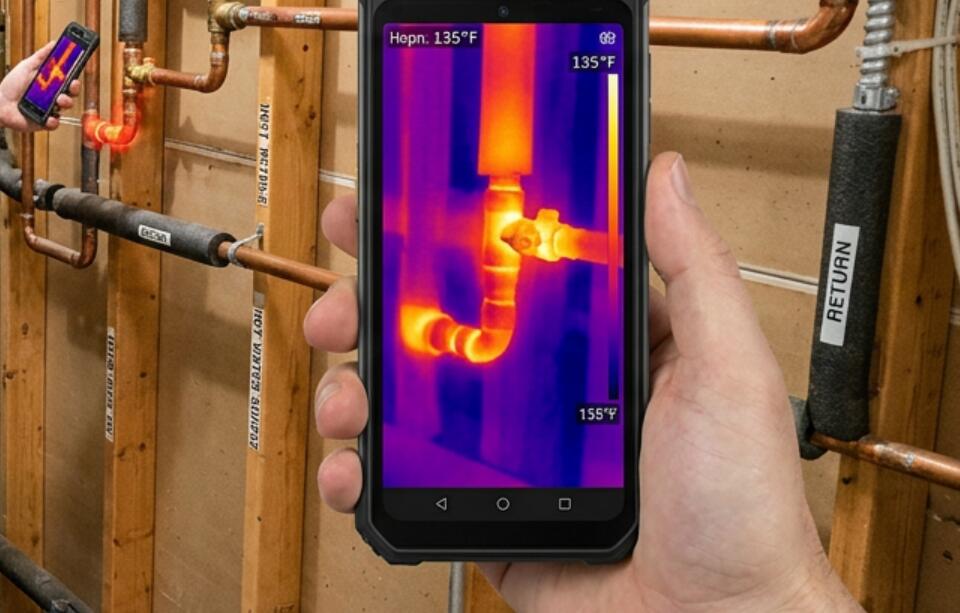
A thermal imaging smartphone captures these differences as variations in surface temperature. Depending on the device's colour palette, warmer areas may appear yellow, orange, red, or white, while cooler surfaces may appear blue or purple. A noticeably warmer linear pattern along a pipe can indicate exposed metal or insufficient insulation.
Nevertheless, a thermal image does not directly reveal what is inside a wall or beneath a floor. It shows surface temperatures, which may be influenced by surrounding materials, airflow, reflections, and other heat sources. Therefore, thermal imaging should be treated as a diagnostic screening method rather than definitive proof of an insulation defect.
Preparing Your Smartphone for an Accurate Inspection
Before beginning the inspection, ensure that your thermal imaging phone has enough power and that the thermal camera works well.
For more reliable observations, prepare the heating system and inspection environment carefully:
- Run the water heater under normal operating conditions until the hot water distribution pipes have reached a reasonably stable temperature.
- Allow sufficient time for hot water to circulate through the pipe network.
- Reduce unnecessary drafts by closing nearby windows and doors.
- Turn off temporary heat sources that could interfere with the readings.
- Identify accessible pipe routes, including sections near the water heater, valves, joints, and distribution points.
- Record the approximate inspection conditions, including room temperature and heating system operating status.
Consistent conditions are particularly important when comparing different sections of the same pipe. A pipe inspected immediately after hot water circulation may display a different thermal pattern from one inspected after several minutes of inactivity.
Step-by-Step Guide to Finding Missing Pipe Insulation
Once the equipment and heating system are ready, follow a systematic inspection procedure to identify potential insulation gaps.
Step 1: Locate the Main Hot Water Pipework
Start near the water heater, where hot water enters the distribution network. Identify the outgoing hot water pipe and follow its accessible route toward the main outlets. Photograph the pipe layout before taking thermal measurements so that suspicious areas can be matched to their physical locations later.
Step 2: Activate Thermal Imaging Mode
Open the thermal imaging application on your phone and select an appropriate temperature range. Automatic temperature adjustment is convenient for initial scanning, but manual adjustment may help reveal smaller differences between neighbouring pipe sections. Keep the camera at a consistent distance and angle whenever possible.
Step 3: Scan the Entire Pipe Surface
Move the smartphone slowly along the accessible pipework. Pay particular attention to bends, connections, support brackets, valves, and transitions between different pipe materials. These locations are common areas where insulation may be incomplete or poorly fitted.
Step 4: Identify Unusually Warm Sections
Compare neighbouring pipe sections rather than relying exclusively on the absolute temperature displayed by the camera. A short, distinctly warmer section surrounded by cooler insulated pipework may indicate missing insulation. Look for sudden temperature changes, narrow hot spots, and continuous warm lines extending along exposed pipe surfaces.
Step 5: Record and Compare Thermal Images
Save photographs of suspicious areas and include visible reference points whenever possible. Compare the thermal images with ordinary photographs to establish the precise physical location of each potential insulation defect. Repeating the scan under similar operating conditions can help determine whether the temperature pattern is consistent.
Step 6: Verify the Suspected Insulation Gap
Where the pipe is accessible, visually inspect the insulation covering. Look for missing sections, compressed foam, damaged joints, loose wrapping, and uncovered fittings. If the thermal pattern is ambiguous, use an appropriate contact thermometer or seek professional assessment before undertaking repairs.
Common Thermal Patterns That Reveal Insulation Deficiencies
Several visual characteristics can help distinguish potential insulation problems from ordinary temperature variations:
- Isolated hot spots: Small, concentrated warm areas may indicate exposed pipe sections or gaps around fittings.
- Continuous warm lines: Extended warm patterns may suggest an entire pipe section lacks adequate insulation.
- Uneven temperature transitions: Abrupt changes between adjacent sections can indicate inconsistent insulation coverage.
- Warm valve connections: Poorly insulated valves and joints can release significant amounts of heat.
- Repeated warm patterns: Similar thermal signatures appearing during multiple inspections provide stronger evidence of a persistent problem.
Important Limitations and Safety Considerations
Thermal imaging smartphones have limitations. Their relatively low resolution may make it difficult to identify small defects, especially when pipes are concealed behind thick walls or covered by reflective materials. Metal surfaces can also produce misleading infrared readings because of their reflective properties.
Furthermore, thermal imaging cannot reliably determine insulation thickness or material condition without additional inspection. Avoid touching hot pipes, opening pressurised plumbing connections, or removing protective equipment while the heating system is operating. Electrical components around water heaters should only be inspected by appropriately qualified professionals.
Conclusion
Using a thermal imaging smartphone to locate missing insulation along water heater pipes is an accessible and efficient way to investigate hidden heat-loss problems. By scanning pipework systematically, comparing neighbouring temperature patterns, and documenting suspicious areas, homeowners can identify potential insulation deficiencies before they contribute to prolonged energy waste. The technology is especially useful for prioritising inspections around exposed pipework, fittings, bends, and distribution connections.
Ultimately, the greatest benefit comes from combining thermal imaging with physical verification and appropriate maintenance. Once confirmed insulation gaps have been repaired, a second thermal inspection under comparable operating conditions can help assess the improvement. This straightforward process supports better hot water efficiency, reduced unnecessary heat loss, and more informed long-term property maintenance decisions.