How to hide and unhide a folder or a file on Android devices?
Last updated: 2026-09-07
Welcome to Blackview (Well-known brand of rugged phone and tablet) blog. Hope the guide helps.
Android devices often contain personal photos, videos, documents, downloads, and other files that you may not want to appear in ordinary file-browsing or gallery views. Whether you are trying to organize sensitive documents, prevent certain images from showing in a gallery app, or simply keep a folder out of sight, Android provides several ways to hide files. The exact options depend on the Android version, phone manufacturer, and file-management application you use, but the underlying techniques are broadly similar.
- Read also: How to hide apps on Android/iPhone?
- How to find invisible apps on Android?
- How to hide text messages on Android?
- 4 Ways to hide videos on Android
There are two important concepts to understand before you begin. A hidden file is not necessarily a protected file: someone who knows where to look may still be able to access it. Also, hiding a file is different from encrypting it or placing it inside a secure folder. This guide explains the main practical methods for hiding and unhiding files and folders on Android.
Method 1: Rename a file or folder with a dot
One of the most widely supported Android file-hiding techniques is to rename a file or folder so that its name begins with a period. In Unix-like file systems, names beginning with a dot are conventionally treated as hidden. Many Android file managers therefore provide an option to hide these entries from normal browsing.
How to hide a folder or file
- Open your Android device's Files, File Manager, or similar app.
- Navigate to the file or folder you want to hide.
- Press and hold the item to select it.
- Choose Rename from the available menu.
- Add a period (.) to the beginning of the existing name.
- Confirm the new name.
- Enable Show hidden files in the file manager if you need to verify that the item is still present.
For example, a folder called PrivateDocuments could become .PrivateDocuments. The files inside the folder are not automatically encrypted; the technique primarily changes whether the folder is displayed by applications that respect hidden-file conventions.
How to unhide it
- Open your file manager.
- Enable Show hidden files if the option is available.
- Locate the file or folder whose name begins with a period.
- Press and hold it and select Rename.
- Remove the initial period.
- Save the new name.
After the period is removed, applications that normally display the file should be able to see it again.
Method 2: Use a .nomedia file to hide media
If your main goal is to stop photos, videos, or audio files in a folder from appearing in gallery or media applications, a .nomedia file can be useful. Android's media scanner can use this marker to exclude media stored in that directory from normal media indexing.
How to hide media from gallery apps
- Open a file manager that allows you to create files.
- Open the folder containing the photos, videos, or audio you want to hide.
- Create a new empty file named .nomedia.
- Make sure the filename begins with a period and contains no additional extension.
- Close and reopen the relevant gallery or media application.
- If necessary, restart the device or allow Android time to update its media index.
This method is particularly useful for preventing selected media folders from cluttering a gallery. However, it should not be considered strong security. A file manager may still display the underlying files, and applications with appropriate access can potentially read them.
How to make the media visible again
- Enable hidden-file viewing in your file manager.
- Open the folder containing the .nomedia file.
- Select the .nomedia file.
- Delete it.
- Give the media scanner time to index the folder again, or restart the phone if necessary.
Removing the marker does not normally delete the photos or videos themselves. It simply allows compatible media applications to index them again.
Method 3: Use a built-in Secure Folder or private space
For genuinely private information, a manufacturer's secure-storage feature is generally more appropriate than simply renaming files. Some Android phones provide features such as a Secure Folder, private space, or another protected container. These features can combine app-level access controls with stronger isolation than ordinary hidden files.
General steps
- Open your phone's Settings and search for Secure Folder, Private Space, or Private Safe.
- Complete the initial setup and create the required authentication method.
- Open the protected area.
- Choose the option to add or import files.
- Select the files or folders you want to keep private.
- Confirm the transfer or import.
- Use the protected area's lock or authentication controls whenever you finish using it.
The exact terminology and functionality vary between manufacturers and Android versions. If your phone provides such a feature, it is usually preferable for sensitive material because merely making a filename invisible does not prevent someone with access to the device from discovering it.
Method 4: Hide files using a file-management app
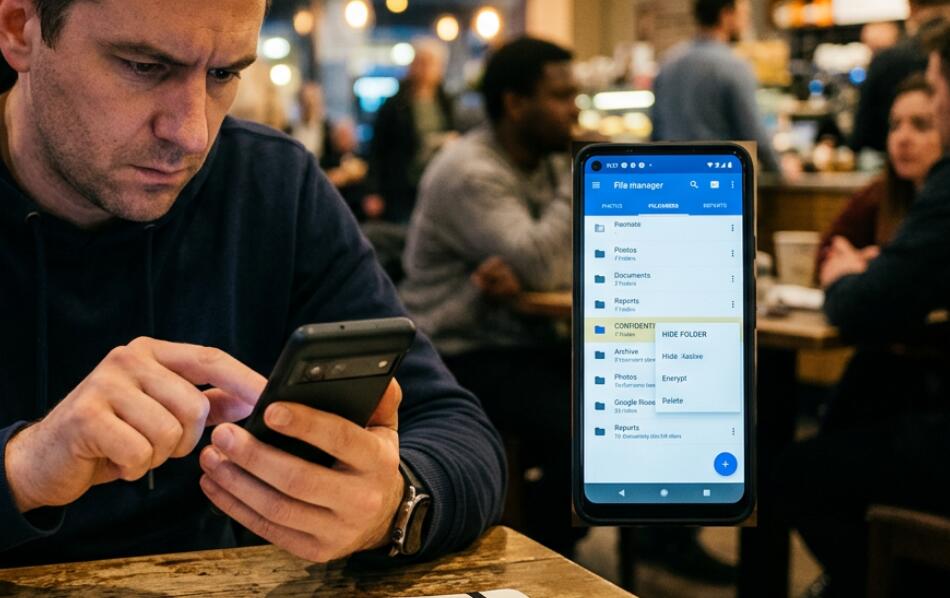
Some third-party file managers offer dedicated hiding functions. These may allow you to select one or more files and choose Hide without manually changing filenames. The process varies considerably between applications, so the safest approach is to use the application's own instructions and carefully check whether its hiding feature is merely cosmetic or actually protected by encryption.
Typical procedure
- Open the trusted file-management application.
- Locate the file or folder.
- Press and hold the item.
- Choose Hide, Move to private, or a similarly named command.
- Follow any authentication or confirmation prompts.
- Use the application's hidden-file or private-area section to access the content later.
Before relying on a third-party application for privacy, review its permissions and reputation. A file manager with extensive access to your storage can potentially access a large amount of personal information, so convenience should not come at the expense of security.
Five important things to know after hiding files
1. Hidden does not mean encrypted
A dot-prefixed filename or a .nomedia marker mainly controls visibility. These techniques do not necessarily protect the underlying data from someone who can browse the storage. Use a secure or encrypted container when confidentiality matters.
2. Gallery visibility can differ from file visibility
A photo may disappear from your gallery while remaining fully accessible through a file manager. This is expected when using media-exclusion techniques such as .nomedia. Always decide whether you want to hide an item from a particular app or restrict access to the item itself.
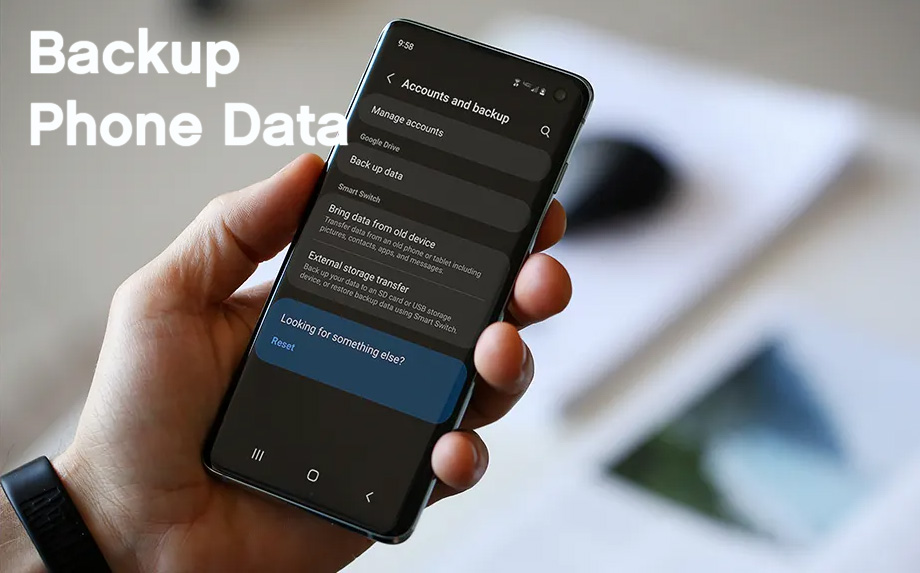
3. Back up important files first
Before moving, renaming, or deleting files, make sure important information exists in another safe location. An accidental rename or deletion can make a file difficult to find, particularly when you are unfamiliar with your phone's storage structure.
4. Hidden files may reappear after app changes
System updates, file-manager settings, media indexing, or changes to gallery applications can affect how hidden content is displayed. If something unexpectedly appears again, check whether hidden-file viewing has been enabled or whether the relevant application ignores the hiding convention.
5. Choose the method based on your goal
If you only want to keep a folder out of ordinary browsing, a dot-prefixed name may be enough. If you want to prevent media from appearing in a gallery, .nomedia may be more appropriate. If you need meaningful privacy against other people who can access your phone, use a secure folder, private space, or another authentication-based solution instead of relying on visibility settings alone.
Final recommendations
Android offers several ways to hide files, but each method solves a slightly different problem. Renaming an item with a leading period is simple and widely compatible, while a .nomedia file is useful when the objective is to prevent media from appearing in gallery applications. Built-in secure-storage features provide a stronger choice for genuinely private information, and third-party file managers can offer additional convenience when they come from a trustworthy source.
Before hiding anything important, remember where the file is stored and keep an appropriate backup. Most importantly, do not confuse invisibility with security: if the information would cause serious problems if another person accessed it, use authentication and encryption rather than a basic hidden-file technique.