How to set the default browser on your phone (Android/iOS)?
Last updated: 2026-10-21
Welcome to Blackview (World's well-known brand of rugged smartphones, including rugged phone with projector, rugged phone with eSIM, and Android 16 rugged phone, etc.) blog. Hope the guide helps.
Choosing a default browser on your smartphone makes browsing the internet faster and more convenient. Instead of manually opening your preferred browser every time you tap a website link, you can let your phone automatically use the browser you trust most. Whether you prefer Google Chrome, Safari, Firefox, Microsoft Edge, or another compatible browser, changing this setting takes only a few steps.
Although Android phones and iPhones both support default browser settings, the process differs between the two operating systems. Android generally offers browser settings through the Apps menu, while iPhones provide the option through Settings and the selected browser's configuration page. This guide explains how to change your default browser on both platforms, troubleshoot common problems, and choose the best browser for your everyday needs.
- Read also: How to change app icons on Android?
- What Should I Do If I Forgot My Phone Password and Lock Pattern?
- How to free up storage space on your phone?
- How to add a phone number in Google account?
How to Set Your Default Browser on Android
Android lets you choose which installed browser opens web links automatically. The exact menu names may vary slightly depending on your phone manufacturer, Android version, and system interface.
- Step 1: Open Settings. Unlock your Android phone and open the Settings app.
- Step 2: Find Apps. Tap Apps, Applications, or Apps & notifications, depending on your device.
- Step 3: Open Default apps. Look for Default apps or Choose default apps. You may need to tap a menu or select an advanced settings option first.
- Step 4: Select Browser app. Find the Browser app category to view the browsers installed on your phone.
- Step 5: Choose your preferred browser. Tap Chrome, Firefox, Edge, or another supported browser in the list.
- Step 6: Test the setting. Open a link from a message or another app to check whether it launches in your selected browser.
If your preferred browser does not appear in the list, install it from Google Play and check again. On some Android phones, you can also open Settings, search for "Default apps," and navigate directly to the relevant menu.
How to Set Your Default Browser on iPhone
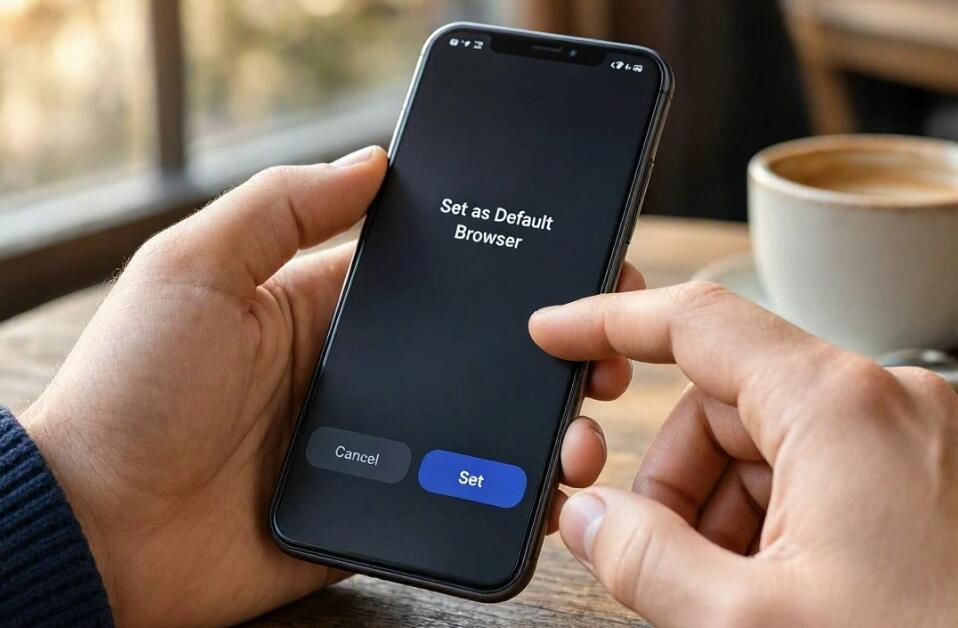
On an iPhone, you can change the default browser from the Settings app. The available options depend on your iOS version and the compatible browsers installed on your device.
- Step 1: Install your preferred browser. If you want to use Chrome, Firefox, Edge, or another alternative, download it from the App Store.
- Step 2: Open Settings. Tap the Settings icon on your iPhone's Home Screen or in the App Library.
- Step 3: Find the browser settings. Scroll down to the installed browser's name and tap it. On supported iOS versions, you can also go to Settings, Apps, Default Apps.
- Step 4: Open Default Browser App. Select the default browser option if it appears in the browser's settings.
- Step 5: Select your preferred browser. Choose Safari, Chrome, Firefox, Edge, or another available compatible browser.
- Step 6: Confirm the change. Return to the Home Screen and tap a website link in another app to verify that it opens in your selected browser.
If the Default Browser App option is missing, update iOS and the browser if updates are available. Also check that the browser supports Apple's default-browser functionality in your region and operating system version.
Why Should You Change Your Default Browser?
Your default browser determines which application opens web links when you tap them in supported apps. Choosing the right one can improve convenience, privacy, and compatibility with the services you use every day.
- Convenience: Open links automatically in your preferred browser without selecting an app each time.
- Cross-device syncing: Some browsers synchronize bookmarks, passwords, tabs, and browsing history across your devices.
- Privacy features: Certain browsers offer tracking protection, enhanced privacy controls, or additional content-blocking options.
- Productivity: Features such as tab management, translation, reading modes, and password managers can simplify daily browsing.
Keep in mind that changing your default browser does not automatically transfer your bookmarks, saved passwords, or browsing history from your previous browser. You may need to import this information separately.
Which Browser Should You Choose?
The best browser depends on your priorities, including privacy, performance, compatibility, and synchronization.
- Google Chrome: A practical choice for people who use Google services and want to synchronize browsing data across devices.
- Safari: A natural option for iPhone users who prefer Apple's ecosystem and built-in privacy features.
- Mozilla Firefox: Worth considering if you value customization and a range of privacy-related settings.
- Microsoft Edge: A useful option for people who frequently work with Microsoft services and Windows devices.
Before choosing, consider which features matter most to you. Review each browser's privacy settings, update frequency, and data synchronization options rather than assuming that one browser is automatically best for everyone.
How to Fix Default Browser Problems
Sometimes, links continue opening in the wrong browser even after you change the setting. Several simple checks can help resolve this issue.
- Check the default setting again: Return to your phone's Default apps or Default Browser App menu and confirm your selection.
- Update your browser: Install available updates from Google Play or the App Store.
- Restart your phone: Restarting can help resolve temporary system or application issues.
- Check the app's own settings: Some apps open links using their built-in browsers rather than your system default.
- Review special link settings: On Android, supported apps may have separate settings for opening certain website links. These settings are different from the default browser selection.
If the problem continues, check your phone manufacturer's support documentation or Apple's current iPhone guidance. Menu names and available settings can change with software updates.
Can You Change Your Default Browser at Any Time?
Yes. You can generally change your default browser whenever you want by returning to your phone's default-app settings and selecting another compatible browser. You do not need to uninstall your existing browser to make the change.
However, some links may still open in an app's built-in browser, and certain services may use their own link-handling behavior. If you notice inconsistent results, test links in several apps before assuming that the default setting has failed.
Final Thoughts
Setting your default browser on Android or iPhone is a straightforward way to personalize your mobile experience. Android users can usually find the option under Settings and Default apps, while iPhone users can select a compatible browser through Settings and the Default Browser App option. Once configured, your preferred browser should open supported web links automatically.
Take a moment to compare available browsers and choose one that fits your browsing habits, privacy preferences, and other devices. If the setting does not work as expected, verify your selection, update your software, and check whether the app you are using handles links independently. With the right configuration, you can enjoy a smoother and more consistent browsing experience on your phone.