How to increase or decrease app icon size on Android devices?
Last updated: 2026-08-18
Welcome to Blackview (World's well-known brand of rugged phones) blog. Hope this guide helps.
Android devices give users a great deal of flexibility when it comes to customizing the appearance of the home screen. One of the most useful options is the ability to change the size of app icons. Whether the icons look too small and difficult to recognize or too large and leave little room for other apps, adjusting their size can make the home screen much more comfortable to use. The exact method depends on the Android brand, launcher, and software version installed on the device.
- Read also: How to find missing app icons on your phone?
- How to update apps on Android phone?
- How to Close Background Apps on Android/iPhone?
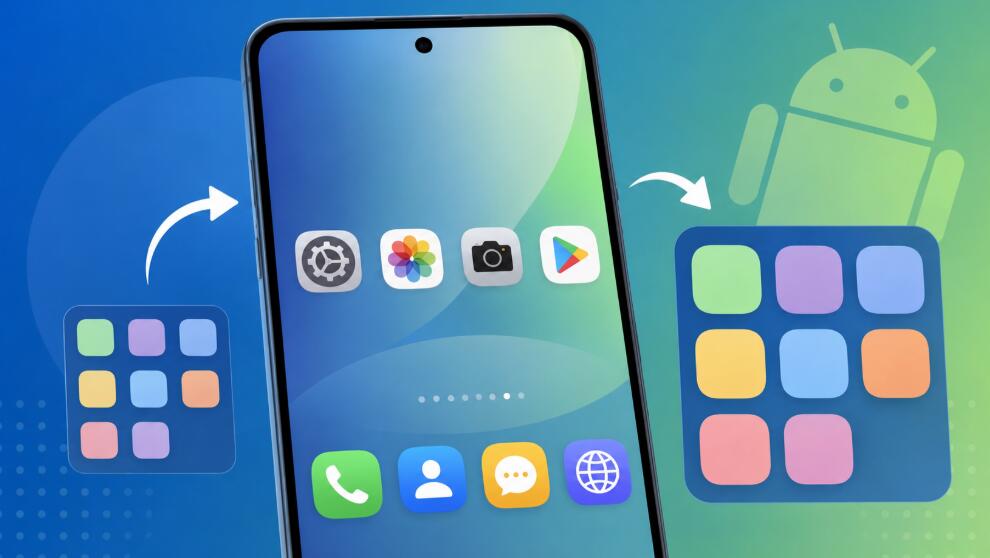
Changing app icon size does not normally affect the apps themselves, their data, or their performance. Instead, it changes how app shortcuts are displayed on the home screen. Some Android phones provide a direct icon-size slider, while others combine icon size with the home-screen grid, display size, or launcher settings. The following guide explains the most common methods, provides step-by-step instructions, and covers what to do when an Android phone does not offer a dedicated icon-size setting.
Change App Icon Size Through Home Screen Settings
The easiest method on many Android devices is to open the home-screen customization menu. Manufacturers use different names for this feature, but it is commonly found by pressing and holding an empty area of the home screen.
- Go to the Android home screen.
- Press and hold an empty space on the home screen.
- Tap Home settings, Settings, or a similar option.
- Look for an option such as Icon size, App icon size, or Icon layout.
- If an icon-size slider is available, move it toward the smaller or larger setting.
- Preview the icons and adjust the slider until they have the desired size.
- Return to the home screen to save or apply the change.
Why This Method Is Usually the Best Choice
A dedicated icon-size control changes the appearance of icons without unnecessarily changing the size of text and other interface elements. It is therefore a good option when you are happy with the rest of the Android interface but want more control over the home-screen appearance.
Adjust the Home Screen Grid to Change Icon Size
Some Android phones do not provide a separate icon-size slider. Instead, they allow users to change the number of rows and columns displayed on the home screen. This can indirectly change the size and spacing of app icons.
- Press and hold an empty area of the home screen.
- Open Home settings or Home screen settings.
- Find Home screen grid, Grid, or Screen layout.
- Choose a layout with fewer columns if you want larger icons and more spacing.
- Choose a layout with more columns if you want smaller icons and more apps on each screen.
- Tap Apply, Done, or the equivalent confirmation button.
Choosing the Right Grid
A smaller grid generally provides larger visual elements and a less crowded appearance. A larger grid is useful if you want to fit more applications on a single home-screen page. However, the exact icon dimensions can vary because some launchers change spacing as well as icon size.
Change Icon Size Using Display Size Settings
If your Android device does not offer a dedicated home-screen icon control, the system-wide display-size setting may provide another solution. This method can make many interface elements larger or smaller, so it should be used carefully.
- Open the Settings application.
- Go to Display or Display and brightness.
- Find Display size, Screen zoom, or a similarly named setting.
- Move the adjustment control toward a smaller setting to reduce interface elements.
- Move it toward a larger setting to enlarge interface elements.
- Check the home screen and other applications after making the change.
Unlike a launcher-specific icon setting, display size can affect menus, buttons, text, and other elements throughout the phone. It is therefore better suited to users who want a broader interface-size adjustment rather than an icon-only change.
Change App Icon Size With a Custom Android Launcher
Another option is to use a third-party Android launcher. Custom launchers often provide more detailed home-screen controls than the default launcher, including independent settings for icon size, icon labels, grid dimensions, and spacing.
- Install a reputable launcher that supports icon-size customization.
- Open the launcher and follow its initial setup instructions.
- Set it as the default home application if Android asks you to do so.
- Open the launcher's settings menu.
- Find the Home screen, Layout, or Icon section.
- Adjust the icon-size control to increase or decrease the icons.
- Change the grid or icon-label settings if additional customization is needed.
Things to Consider Before Using a Custom Launcher
A third-party launcher can provide extensive customization, but it also replaces the phone manufacturer's standard home-screen experience. Some manufacturer-specific features may behave differently, and the available options depend on the launcher. If you prefer a simple setup, the built-in launcher settings are usually preferable.
How to Make Android App Icons Larger
If the icons are too small to see comfortably, several approaches can make them appear larger. Start with the dedicated icon-size setting if your phone provides one.
- Open the home-screen customization settings.
- Increase the icon-size slider if available.
- If there is no slider, reduce the number of columns in the home-screen grid.
- Consider increasing the system display size if you also want larger interface elements.
- Check the result and make small adjustments until the layout is comfortable.
How to Make Android App Icons Smaller
Smaller icons can create a cleaner layout and allow more applications to fit on a single home-screen page. This can be especially useful for users who prefer a compact interface.
- Open the home-screen settings.
- Move the icon-size control toward the smaller setting.
- If necessary, select a grid with more columns.
- Reduce the system display size only if you also want other interface elements to become smaller.
- Review the home screen to make sure labels and icons remain easy to recognize.
What to Do If You Cannot Find an Icon Size Option
Not every Android device provides an independent icon-size control. The option may be unavailable because of the phone manufacturer, Android version, default launcher, or regional software configuration. In that situation, search the home-screen settings for terms such as Grid, Layout, Icon, or Home screen. If none of these options provide the required control, a compatible custom launcher may offer additional flexibility.
Changing the size of app icons is a simple way to personalize an Android home screen and make it easier to navigate. If your phone includes a dedicated icon-size setting, that is generally the most precise solution. If it does not, changing the home-screen grid can provide a similar visual result without installing additional software.
For users who want even more control, display-size settings and custom launchers offer additional possibilities. The best choice depends on whether you want to modify only the app icons or change the overall scale of the Android interface. By trying the built-in options first and making adjustments gradually, you can create a home-screen layout that is easier to read, less crowded, and better suited to your personal preferences.