How do you tell if someone blocked you on WhatsApp?
Last updated: 2026-09-30
Welcome to Blackview (Well-known brand of rugged smartphones, AI smart glasses, and tablets) blog. Hope this guide has been helpful.
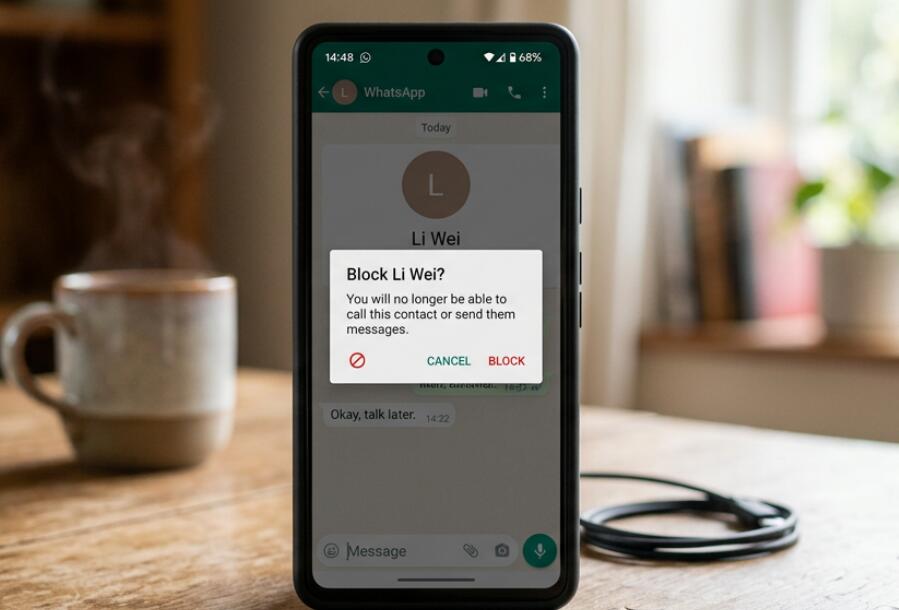
Being blocked on WhatsApp is not something the app confirms directly. WhatsApp deliberately keeps blocking indicators ambiguous, so you cannot rely on a single sign to determine with certainty that another person has blocked you. Instead, you need to look for several changes at the same time, such as messages remaining undelivered, calls failing to connect, and changes in what profile information you can see.
- Read also: How to mute / unmute someone on WhatsApp?
- How to know if someone muted you on WhatsApp?
- How to fix WhatsApp not working on WiFi but working on mobile data (Android/iOS)?
- How to know if someone archived you on WhatsApp?
- How to clear WhatsApp cache on a phone?
These signs can also have ordinary explanations. Someone may have changed their privacy settings, lost internet access, turned off their phone, stopped using WhatsApp, or changed their phone number. The most useful approach is therefore to check several indicators together rather than treating one missing feature as proof. The following guide explains what to look for and how to interpret each sign carefully.
Check whether your messages show only one check mark
One of the most noticeable signs is the delivery status of messages. When you send a WhatsApp message, a single gray check mark generally indicates that the message has been sent from your device but has not been delivered to the recipient's device. Two gray check marks indicate delivery, while two blue check marks can indicate that the message has been read when read receipts are enabled.
If messages to one particular contact consistently remain at one gray check mark for a long period, blocking is one possible explanation. However, this does not prove that you have been blocked. The recipient could have no internet connection, their phone could be switched off, WhatsApp could be unavailable on their device, or they could have stopped using the service.
Look at the person's last seen or online status
Another possible indicator is that you can no longer see a contact's last seen or online information. If this information used to be visible but suddenly disappears, blocking is one possibility. However, WhatsApp allows users to control who can see information about when they were last active, so privacy settings can produce the same result.
For this reason, missing activity information should be considered alongside other signs. A person may intentionally hide their last seen and online status from everyone or from selected contacts. Your own privacy settings can also affect what information you are able to see.
Check whether you can see profile changes
If you previously saw a person's profile photo, status information, or other profile details and these suddenly stop appearing or stop updating, it may be another clue. A blocked contact may no longer receive certain profile updates from the person who blocked them.
However, profile visibility is also controlled by WhatsApp privacy settings. Someone can restrict their profile photo, status, or other information without blocking you. A person may also remove their profile picture entirely. Therefore, a missing profile photo by itself should not be treated as confirmation that you have been blocked.
Try making a WhatsApp voice or video call
Calling can provide another useful indicator. If you attempt to make a WhatsApp voice or video call and it consistently fails to connect, blocking is one possible explanation. If you have also noticed that your messages remain undelivered and profile information has disappeared, the combination of these signs becomes more noteworthy.
Nevertheless, call problems can occur for many technical reasons. Poor connectivity, temporary service problems, device settings, or the other person's internet connection can prevent a call from connecting. A single failed call therefore does not establish that you have been blocked.
Try adding the person to a WhatsApp group
Another commonly discussed indicator involves adding the contact to a WhatsApp group. If WhatsApp prevents you from adding the person to a group, blocking is one possible explanation. However, group privacy settings and other account-related restrictions can also affect whether someone can be added.
If you test this method, avoid repeatedly creating groups or sending invitations simply to confirm whether someone has blocked you. There is rarely a need to escalate contact attempts. The purpose of checking these indicators should be to understand what may have happened, not to bypass another person's communication preferences.
Use several signs together
No single test is completely reliable. The strongest indication comes from several changes occurring simultaneously. For example, if you can no longer see the person's activity information, their profile information appears unavailable, your messages remain at one check mark, and WhatsApp calls consistently fail, blocking becomes a plausible explanation.
Even then, WhatsApp intentionally avoids giving users a definitive notification. This design protects privacy by preventing the person who may have been blocked from receiving a direct confirmation. The correct conclusion is therefore that multiple indicators can suggest blocking, but they cannot provide absolute proof.
Steps to check whether someone may have blocked you
Rather than relying on one test, work through the indicators systematically. This can help you distinguish a possible block from an ordinary connectivity or privacy issue.
- Open the WhatsApp conversation with the contact.
- Send a normal message and observe whether it remains at one gray check mark.
- Check whether you can still see the person's last seen or online information, if you previously could.
- Look at the contact's profile photo and see whether profile information that was previously available has changed or disappeared.
- Attempt a WhatsApp voice or video call and note whether it consistently fails to connect.
- If appropriate, check whether WhatsApp allows you to add the contact to a group.
- Compare all of these observations rather than treating any single result as proof.
- Consider alternative explanations, such as privacy changes, no internet connection, a switched-off phone, or an inactive account.
If several indicators occur together and persist over time, you may reasonably suspect that the contact has blocked you. However, there is no official WhatsApp screen that will confirm the conclusion for you.
Why WhatsApp does not clearly tell you that you were blocked
WhatsApp intentionally makes blocking difficult to confirm. A direct notification such as “This person has blocked you” would reveal another user's privacy decision and could encourage unwanted attempts to contact them through other channels. Instead, the service uses ambiguous behavior so that blocking remains a private action.
Could privacy settings look exactly like blocking?
Yes. Privacy controls can change what you see about another person without indicating that you have been blocked. Someone can limit visibility of their profile photo, last seen information, online status, or status updates. As a result, a sudden loss of visible profile information should always be interpreted cautiously.
Could an internet or phone problem cause the same signs?
Yes. If someone's phone is switched off, disconnected from the internet, damaged, or otherwise unable to use WhatsApp, your messages may remain undelivered and calls may fail. Temporary connectivity problems can therefore imitate several of the signs associated with blocking.
What happens to messages sent after you are blocked?
If a person has blocked you, messages you send while the block is active generally will not be delivered to that person. If the block is later removed, messages sent during the blocked period are not simply delivered retroactively. This is another reason not to interpret an undelivered message as proof on its own.
Should you contact the person another way?
If you suspect that someone has blocked you, it is generally better to respect the possibility that they do not want communication through WhatsApp. Repeatedly attempting to contact someone through new accounts, groups, or alternative channels can cross a personal boundary. If there is a legitimate practical reason to communicate, use appropriate judgment and a reasonable channel rather than repeatedly testing the block.
How to interpret the signs without jumping to conclusions
The key is to look for a pattern rather than a definitive “test.” One gray check mark could mean a connectivity problem. A missing profile picture could result from privacy settings. A failed call could be caused by an internet outage. But when several indicators appear together and remain consistent, blocking becomes one plausible explanation among the alternatives.
Ultimately, WhatsApp does not provide a guaranteed method for proving that another user has blocked you. The safest interpretation is to treat multiple signs as indications rather than confirmation. This approach avoids unnecessary assumptions while still giving you a practical way to understand unusual changes in a WhatsApp conversation.
Final Thoughts
If your messages remain undelivered, calls fail, activity information disappears, and profile details are no longer visible at the same time, you may have been blocked. However, WhatsApp's privacy design means that these observations cannot provide absolute certainty, and each sign can have another explanation.
Instead of relying on a single clue or repeatedly testing the contact, consider the overall pattern and respect the other person's communication preferences. In many cases, the most useful answer is not whether you can prove a block, but whether the available signs give you enough information to understand that the person may not currently be available or willing to communicate.