5 Ways to check who has connected to your WiFi
Last updated: 2026-09-07
Welcome to Blackview (Well-known brand of rugged smartphone and tablet) blog. Hope the guide helps.
Knowing who is connected to your WiFi network is an important part of maintaining both network performance and security. When your internet suddenly becomes slower, your data usage increases, or unfamiliar devices appear on your network, checking the connected-device list can help you determine what is happening. Fortunately, you do not usually need advanced technical knowledge to identify devices using your wireless connection.
- Read also: How to change my WiFi password?
- How to check wifi password on Android?
- How to fix a phone that is not connecting to wifi?
- How to fix an iPhone connects to wifi but no internet?
The exact method depends on your router, internet provider, computer, or smartphone. In most cases, the easiest approach is to log in to your router's administration page or use the router manufacturer's mobile application. You can also check connected devices through certain operating-system tools or network-scanning applications. The important thing is to compare the devices you find with phones, computers, televisions, smart speakers, cameras, game consoles, and other equipment that you actually own.
Method 1: Check connected devices through your router
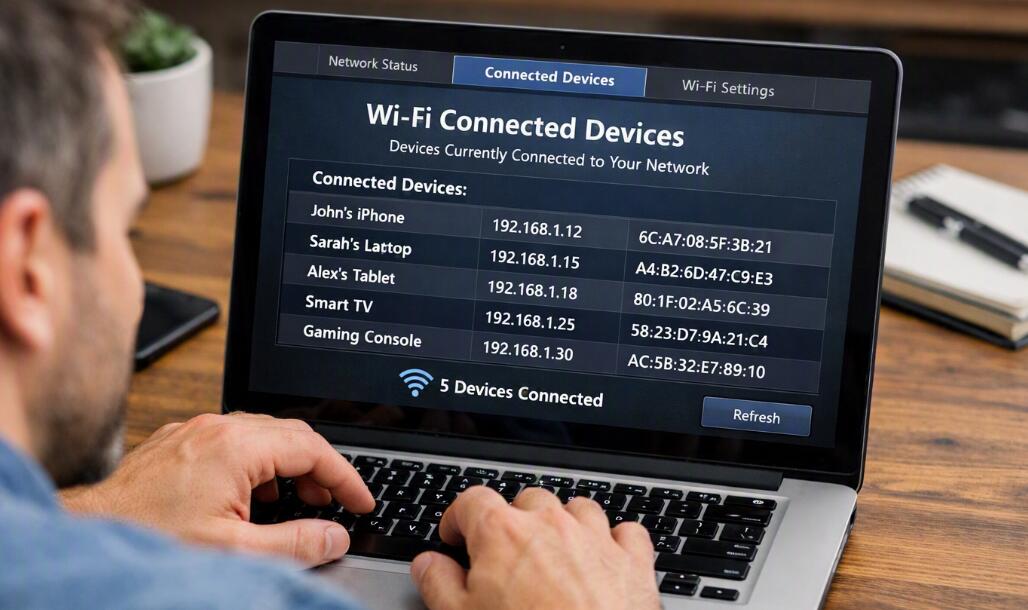
The router is usually the most reliable place to see which devices are currently connected to your WiFi. Most modern routers maintain a list of clients and display information such as device names, IP addresses, MAC addresses, connection type, and sometimes the amount of data being used.
Steps to check your router's device list
Follow these general steps:
- Connect your phone or computer to your home WiFi network.
- Open a web browser and enter your router's local administration address.
- Sign in with the router administrator account.
- Look for a section called Connected Devices, Attached Devices, Clients, Device List, or Network Map.
- Review the list of currently connected devices.
- Identify each device by its displayed name, IP address, or MAC address.
- Remove or block any device that you do not recognize, if your router provides that option.
Router interfaces differ considerably, so you may need to explore the Network, Wireless, LAN, or DHCP sections. Some routers also distinguish between devices connected through WiFi and those connected with Ethernet cables.
Method 2: Use your router manufacturer's app
Many newer routers provide a companion smartphone application that makes network management easier than using a browser-based administration panel. These applications often show an automatically updated list of connected devices and may allow you to pause, block, rename, or prioritize individual connections.
Steps for checking devices in a router app
The general process is:
- Install the official application for your router model.
- Sign in to the router management account.
- Open the section for connected or online devices.
- Review the displayed device names and connection details.
- Tap an unfamiliar device to view additional information.
- Block the device if you determine that it should not have access to your network.
This method is particularly convenient because many applications automatically identify device manufacturers. For example, a MAC address may be difficult to understand, while the application might indicate that a particular device is manufactured by Apple, Samsung, Sony, or another company.
Method 3: Check your network from a computer
Computers can also provide useful information about devices on your local network. Depending on your operating system and technical experience, you can inspect network information using built-in commands or dedicated network-discovery software.
Basic computer-based approach
You can start by checking your computer's network configuration and identifying the local router address. Advanced users can then inspect the local network's address-resolution information or use a trusted network scanner to discover active devices. This approach can provide more technical details, but it is generally less convenient than using the router itself.
- Connect the computer to your home network.
- Find your computer's local IP address and default gateway.
- Open an appropriate network utility or command-line tool.
- Review devices discovered on the local network.
- Compare the results with the devices you own.
Keep in mind that a computer-based scan may not show every device in exactly the same way as your router's administrative interface. Some devices may temporarily sleep, disconnect, use privacy-related addressing features, or prevent certain types of network discovery.
Method 4: Use a network-scanning app
A reputable network-scanning application can make it easier to visualize all devices communicating with your local network. Such tools may display hostnames, manufacturers, IP addresses, MAC addresses, and other network information.
When using a scanner, run it while connected to your own WiFi and review the results carefully. Do not assume that every unfamiliar device is an intruder. Smart TVs, streaming boxes, printers, thermostats, security systems, mesh access points, and guests' phones can all appear with unexpected names.
Method 5: Check your internet provider's equipment
If your internet service provider supplied the modem or router, its customer application or online account may include network-management features. Depending on the provider and equipment, you may be able to see connected devices, change the WiFi password, restart the router, or manage access controls.
What to look for
- Open your provider's official account or router-management application.
- Find the home-network or WiFi section.
- Open the connected-device list.
- Review the names and connection status of devices.
- Use available security controls to remove unauthorized connections.
How to identify an unknown WiFi device
Seeing a device you do not immediately recognize does not automatically mean that someone has hacked your WiFi. Device names can be vague, manufacturers may use generic identifiers, and some modern phones use randomized MAC addresses. Before blocking anything, temporarily disconnect your own devices one by one and refresh the router's device list.
What information should you compare?
When investigating a device, compare its hostname, manufacturer, IP address, MAC address, connection type, and last-seen status. The manufacturer information can be especially useful because it may reveal whether the device is likely to be a smartphone, computer, smart-home product, or networking device.
What to do if you find an unauthorized device
If you are confident that an unknown device does not belong to you, change your WiFi password and use modern wireless security such as WPA2 or WPA3 where available. After changing the password, reconnect only your trusted devices. Also change the router administrator password if you suspect that someone may have accessed the router's management interface.
How to prevent unwanted WiFi connections
Strong security starts with a unique WiFi password that is difficult to guess. Avoid using names, birthdays, addresses, or other easily associated information. Keep your router firmware updated, disable outdated security protocols, and review connected devices periodically. A separate guest network is also useful when visitors need internet access without giving them access to your primary network.
Why your WiFi may still be slow
An unfamiliar device is only one possible cause of slow internet. Congestion from neighboring networks, weak WiFi coverage, an overloaded router, interference, outdated equipment, background downloads, and limitations from your internet service can all affect performance. If every connected device belongs to you, investigate these possibilities before assuming that unauthorized access is responsible.
Final checklist
Checking your WiFi network regularly can help you maintain better performance and identify potential security problems early. Start with the router's connected-device list, then use the manufacturer's app, computer-based tools, network scanners, or your internet provider's equipment-management system when additional information is needed.
If you discover a device that you genuinely cannot identify, do not panic. Confirm whether it belongs to a family member, guest, smart-home product, or another piece of equipment before taking action. If it remains unauthorized, changing the WiFi password, strengthening wireless security, updating the router, and reviewing administrator access are sensible next steps.
With a quick network check every few weeks or whenever your connection behaves unusually, you can keep better control over your home network. The goal is not simply to count connected devices, but to understand which devices have access and ensure that only trusted equipment remains connected.