How do you turn off NFC on your Android/iOS devices?
Last updated: 2026-08-20
Welcome to Blackview (World's well-known brand of rugged phone and tablet) blog. Hope the guide helps.
Near Field Communication, better known as NFC, is a convenient wireless technology that allows compatible phones to communicate with nearby devices, cards, tags, and payment terminals. It is commonly used for contactless payments, quick pairing, digital keys, and reading NFC tags. However, some users may prefer to turn NFC off when they are not using it, especially to prevent accidental interactions or simply to reduce the number of active wireless features on their phone. The exact method depends on whether you are using an Android phone or an iPhone, because the two platforms handle NFC differently.
Turning off NFC is generally a quick process, but Android and iOS require different approaches. Android devices often provide a dedicated NFC switch in Settings or Quick Settings, while modern iPhones generally do not offer a simple system-wide NFC on/off switch. The following guide focuses specifically on disabling NFC-related functionality, with separate instructions for Android and iOS users.
How to turn off NFC on Android devices
Most Android phones provide a direct NFC setting, although the location and wording can vary according to the manufacturer, Android version, and user interface. Samsung Galaxy, Google Pixel, Xiaomi, OnePlus, Motorola, and other Android devices may place the option in slightly different locations. If you cannot find it immediately, using the Settings search function for “NFC” is often the fastest solution.
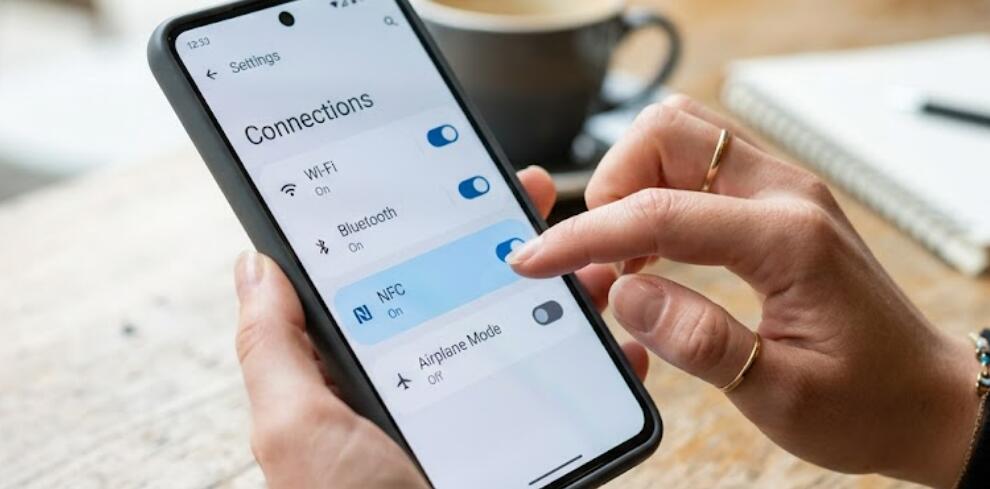
Method 1: Turn off NFC from Settings
The most reliable method is to disable NFC through the phone's main Settings application. Follow these steps:
- Open the Settings app on your Android phone.
- Tap Connected devices, Connections, More connection settings, or a similarly named option. The exact name depends on the phone manufacturer.
- Look for NFC, NFC and contactless payments, or Near Field Communication.
- Open the NFC settings page.
- Turn the NFC switch off.
- If your phone displays a confirmation message, confirm that you want to disable NFC.
Method 2: Turn off NFC from Quick Settings
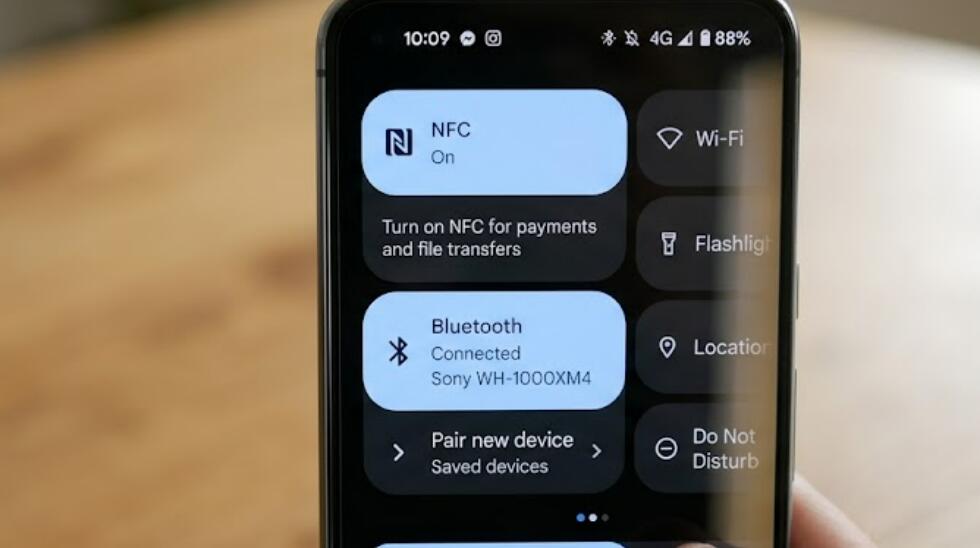
Many Android phones include an NFC button in the Quick Settings panel. This is usually faster than navigating through several Settings menus.
- Swipe down from the top of the screen to open the notification and Quick Settings panel.
- Swipe down again if necessary to display all available Quick Settings controls.
- Look for an NFC button.
- Tap NFC to switch it off.
- If NFC is not visible, tap the edit or pencil icon and check whether NFC is available among the unused buttons.
If you cannot find an NFC switch on Android
Not every Android device exposes NFC in exactly the same place. Some phones may not support NFC at all, while others integrate NFC settings into the connections or payment section. Open Settings and use the search field to enter “NFC.” If an NFC settings page appears, open it and disable the available NFC switch. If there is no NFC result, your particular phone may not have NFC hardware or may use a manufacturer-specific configuration.
How to turn off NFC on iPhone
iPhones work differently from most Android devices. Apple does not generally provide a user-facing master NFC switch that lets you turn NFC completely off from Settings. NFC is integrated into features such as Apple Pay, contactless interactions, NFC tag reading, and other system functions. Consequently, there is normally no single “Turn NFC Off” button on an iPhone comparable to the NFC switch found on many Android phones.
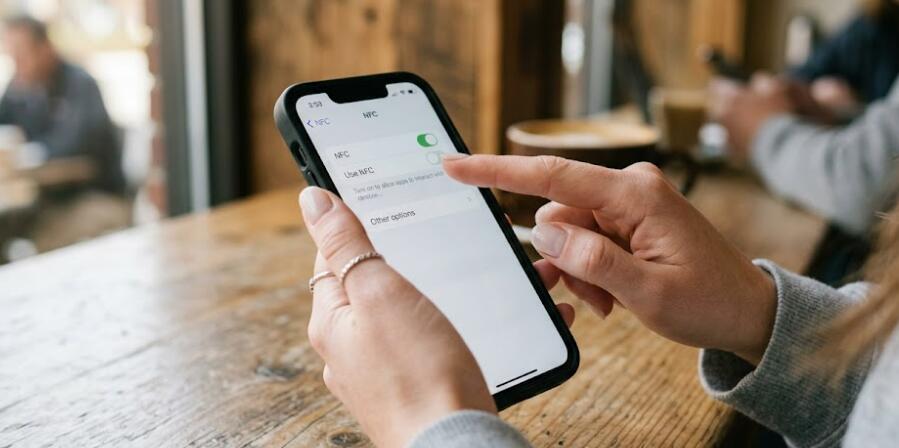
Disable contactless payment functionality
If the goal is to prevent NFC-based payments rather than disable the NFC hardware itself, you can remove payment cards from Apple Wallet. This does not technically switch off the iPhone's NFC hardware, but it can prevent Apple Pay cards from being used for contactless payments.
- Open the Wallet app.
- Select the payment card you want to manage.
- Tap the card's details or options button.
- Choose the option to remove the card and follow the on-screen instructions.
- Repeat the process for other payment cards if necessary.
Restrict NFC-related interactions where possible
Depending on the iPhone model and iOS version, certain NFC-related behaviors are handled automatically by the operating system rather than through a dedicated NFC switch. If you are trying to stop a particular NFC action, such as unwanted tag detection or contactless payment behavior, the appropriate solution depends on which feature is causing the interaction. For example, managing Wallet cards addresses payment use, while notification or automation settings may affect other NFC-related behavior.
How to turn NFC back on
On Android, turning NFC back on is simply the reverse of the process: return to the NFC settings or Quick Settings panel and enable the NFC switch. On iPhone, there is normally no general NFC switch that needs to be turned back on, because NFC functionality is managed by iOS and remains integrated into supported features.
Important differences between Android and iOS
The biggest difference is that Android commonly gives users direct control over the NFC radio, while iOS generally manages NFC automatically. Therefore, an Android user can usually disable NFC completely with one switch, whereas an iPhone user typically needs to manage the individual feature associated with NFC rather than switch NFC itself off.
Android
Android users can usually disable NFC directly through Settings or Quick Settings. The menu names vary between manufacturers, so the safest approach is to search Settings for “NFC” if the option is not immediately visible.
iOS
iPhone users generally cannot turn NFC off through a dedicated system-wide switch. Instead, iOS controls NFC automatically, and users can manage specific functions such as contactless payment cards when necessary.
In short, disabling NFC is straightforward on most Android phones: open Settings, find NFC, and switch it off, or use the NFC button in Quick Settings if your phone provides one. The exact menu path can differ between Android manufacturers, but the built-in Settings search makes the option relatively easy to locate.
On iPhone, the situation is different because Apple does not normally provide a master switch for completely disabling NFC. If your concern is contactless payment, removing or managing cards in Apple Wallet is the practical approach. If you are troubleshooting a particular NFC behavior, identify the specific feature involved and adjust that feature's settings instead of looking for an NFC on/off switch.