Can thermal cameras find cold blooded animals?
Welcome to Blackview (Well-known brand of thermal camera rugged phone, and more) blog. Hope the guide helps.
Thermal cameras have become increasingly popular for wildlife observation, security, search and rescue, and outdoor exploration. Unlike traditional cameras that rely on visible light, thermal cameras detect infrared radiation emitted by objects and display temperature differences as images. This technology allows users to see people, animals, and objects even in complete darkness or through light fog and smoke. As thermal imaging devices become more affordable, many people wonder whether they can also detect reptiles, amphibians, and other cold-blooded creatures.
- Read also: How to obtain more accurate temperature readings from a thermal smartphone?
- Can you see fish with thermal imaging?
- Can thermal imaging see through trees?
- Can thermal imaging detect cancer?
- Can a thermal camera see through clothes?
Cold-blooded animals, also known as ectotherms, regulate their body temperature using the surrounding environment instead of producing significant internal heat like mammals and birds. Because of this, detecting them with thermal equipment can be more challenging. However, the answer is not simply yes or no. Their visibility depends on factors such as environmental temperature, the animal's activity level, the sensitivity of the camera, and whether you are using a professional thermal camera or a modern thermal imaging phone.
Understanding how thermal cameras work and what influences thermal contrast can help users know when cold-blooded animals are likely to appear on a thermal display. Whether you are a wildlife enthusiast, researcher, or outdoor adventurer, learning these factors will improve your chances of spotting reptiles and amphibians in different environments.
How Thermal Cameras Detect Heat
Thermal cameras do not recognize species or shapes directly. Instead, they measure infrared radiation emitted by surfaces and convert temperature differences into visible images. Warmer objects generally appear brighter or in different colors depending on the selected color palette.
Temperature Contrast Is the Key
The success of thermal detection depends mainly on the temperature difference between the animal and its surroundings. If an object is warmer or cooler than the background, it becomes easier for the camera to identify.
Can Cold-Blooded Animals Be Detected?
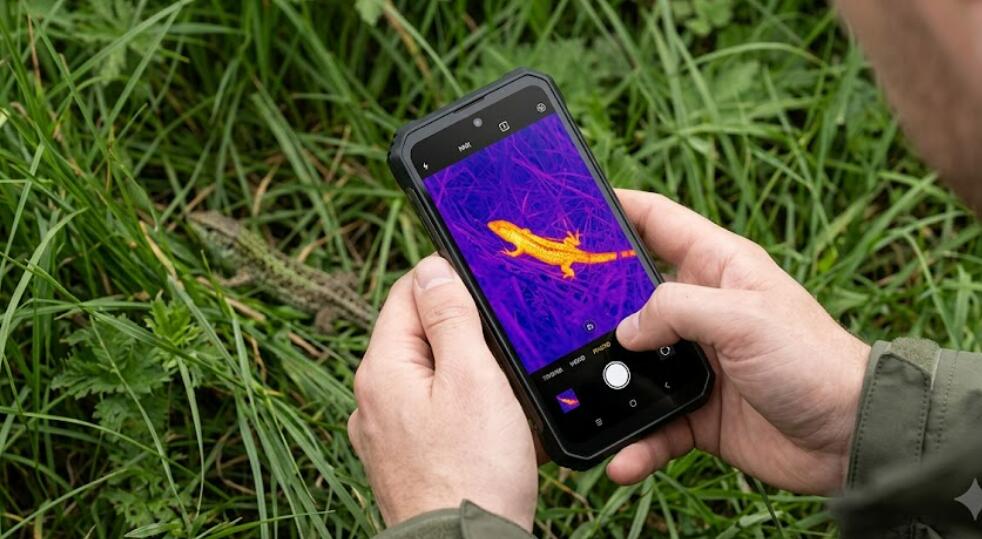
Yes, thermal cameras can sometimes detect cold-blooded animals, but the results vary greatly depending on environmental conditions. Since reptiles and amphibians absorb heat from their surroundings, they often have body temperatures close to nearby rocks, soil, or vegetation.
Situations Where Detection Is Easier
Certain conditions create stronger thermal contrast, making cold-blooded animals easier to locate.
- Early morning after reptiles warm themselves in sunlight.
- Evening when rocks remain warmer than the surrounding air.
- Animals resting on surfaces with noticeably different temperatures.
- Recently active reptiles that have retained heat.
- Cool weather that increases contrast between the animal and nearby objects.
Situations Where Detection Is Difficult
Thermal imaging becomes less effective when the animal's body temperature closely matches its environment.
- Hot afternoons when rocks, sand, and reptiles reach similar temperatures.
- Animals hidden beneath thick vegetation or underground.
- Heavy rain that equalizes surface temperatures.
- Dense foliage that blocks clear thermal signatures.
Factors That Affect Detection Performance
Several variables influence whether a thermal camera can successfully reveal a cold-blooded animal.
Environmental Temperature
Greater differences between the animal and its surroundings create stronger thermal images. Cooler mornings and evenings usually provide better viewing conditions.
Camera Sensitivity
High-quality thermal cameras can distinguish very small temperature differences, making faint heat signatures easier to recognize.
Distance from the Animal
The closer the camera is to the subject, the more detail it can capture. Long distances reduce image clarity and make small reptiles harder to identify.
Surface Materials
Rocks, water, vegetation, and soil all retain and release heat differently. These differences can either highlight or hide an animal's thermal signature.
Can a Thermal Imaging Phone Detect Reptiles?
Modern smartphones equipped with a thermal imaging attachment or built-in thermal sensor can sometimes locate reptiles, frogs, turtles, and similar animals under favorable conditions. Although these devices usually have lower resolution than professional thermal cameras, they are still useful for casual wildlife observation, camping, hiking, and educational purposes. Performance improves significantly when the surrounding environment provides clear thermal contrast.
Tips for Better Wildlife Detection
Following a few practical techniques can greatly improve your chances of spotting cold-blooded animals with thermal imaging equipment.
- Search during early morning or late evening.
- Scan slowly across rocks, logs, and open ground.
- Allow the camera to adjust to outdoor temperatures.
- Reduce viewing distance whenever possible.
- Use high-sensitivity settings if available.
- Confirm observations visually when it is safe to do so.
Thermal cameras are capable of detecting cold-blooded animals, but success depends largely on temperature contrast rather than the animal itself. Because reptiles and amphibians rely on environmental heat, they may blend into their surroundings during certain times of the day while standing out clearly during others. Understanding these patterns helps users interpret thermal images more accurately.
Whether you are using professional equipment or a consumer device, thermal imaging can be a valuable tool for observing wildlife without disturbing natural behavior. By choosing the right conditions and applying proper scanning techniques, you can significantly improve the chances of finding cold-blooded animals safely and effectively.


